



 English
  Türkçe
 Polski
 Українська
 Deutsch
 Română
 Português
 Svenska
 Русский
 Español
 ไทย
ไทย 日本語
日本語


All Nuke Map Callouts in CS2
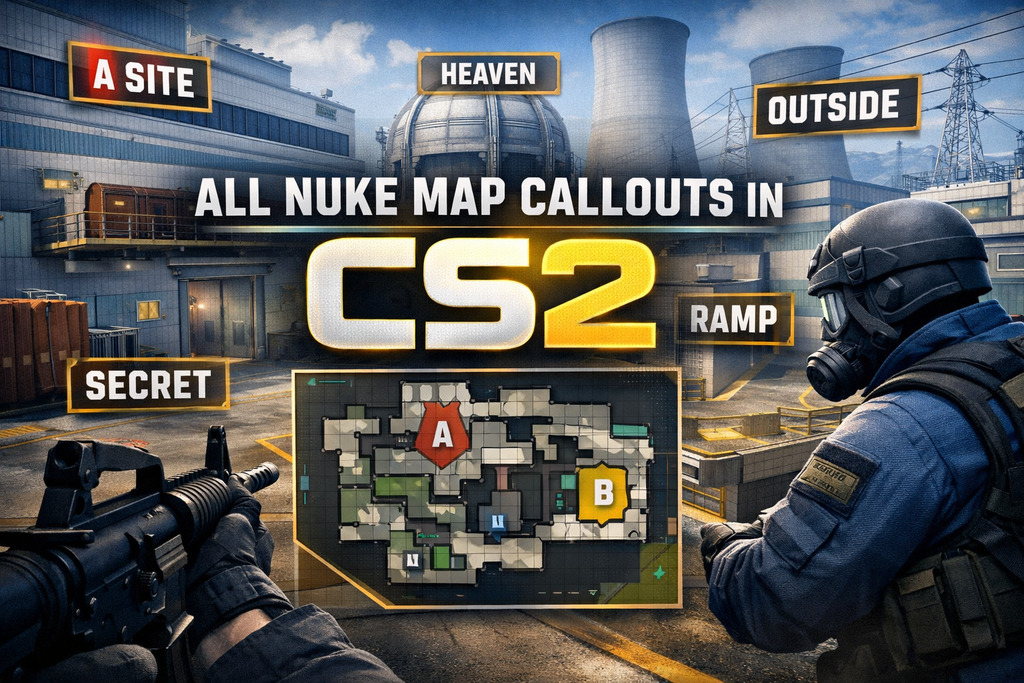
Nuke is a map where bad communication gets punished fast. You might spot someone, but if you can’t say where they are in one or two words, that info is almost useless. That’s why Nuke callouts matter: they make the difference between a clean rotation and a late, messy one.
This article is here to walk you through the Nuke callouts CS2 players actually use with the names people say in matches and what places they point to. Once you’ve got those down, it’s way easier to follow what your teammates are calling and to give clear info yourself. The whole point is helping you feel comfortable with the map and its language, so when someone says a callout, you instantly know where to look and what’s going on.
How Callouts Are Structured on Nuke
If you pay attention to how CS2 Nuke callouts are used in real matches, you’ll notice there’s a pretty clear logic behind them. Players don’t divide Nuke into random chunks. The names mostly come from two things: what you can physically see around you and the fact that the map is built on several vertical levels. Once you start looking at the map that way, callouts stop feeling like a list to memorize and start feeling like a system that actually makes sense.
They’re based on obvious landmarks
Most callouts exist because a place has something that makes it easy to recognize. Doors, vents, ramps, platforms, railings, rooms, and big structural elements naturally become reference points. In the middle of a round, nobody has time to describe geometry, so CS2 Nuke callouts lean on simple, visual cues. If a spot looks different from the areas around it, chances are it has its own name. That’s why many callouts feel intuitive once you connect the name to what’s actually on your screen.
Vertical levels shape a huge part of the naming
You’re often dealing with enemies on a different floor, sometimes just a few meters away but separated by height. Because of that, many Nuke map callouts in CS2 exist mainly to describe elevation. Two positions can be close in terms of distance, but if one is higher or lower, they’re treated as different places and called out differently. This makes it much easier to understand not just where something is happening, but also at what level it’s happening.
Some callouts exist because of how people move through the map
There are areas that get names not because they’re big or impressive, but because everyone passes through them. These are the connectors, the small transition spaces between bigger sections of the map. In CS2 Nuke callouts, these spots matter because they help describe rotations and positioning in a clear, short way. Instead of saying “he’s moving from this room toward that area,” players can just use the name of the connector, and everyone knows what that means.
Both bombsites are broken into multiple named parts
This is especially clear with Nuke A site callouts and Nuke B site callouts. Neither site is treated as one single space. Each one is split into several areas based on height and nearby structures. On A, players separate the main floor of the site from the positions above it and the areas overlooking it. On B, the same idea applies: the site itself, the surrounding rooms, and the lower areas are all named separately. This reflects how the map actually plays out visually and spatially, with action happening on different levels at the same time.
Distinct shapes and roles turn into their own callouts
When an area has a unique layout, a specific function, or a shape that stands out, it usually ends up with its own name. Over time, these names stick because players recognize those spaces instantly. This is one of the reasons Nuke map callouts in CS2 are fairly consistent across matches and skill levels. Once you’ve seen the same type of spot a few times, the name starts to feel natural instead of forced.
Navigating the Nuke Map Using Callouts
Nuke is a map that’s hard to describe if you rely on full sentences and vague directions, so Nuke CS2 callouts give everyone a shared set of short names for specific places, so you can point to a position or describe movement without slowing things down.
Callouts as fixed reference points
Most CS2 Nuke map callouts are tied to spots that always look the same: the same rooms, the same platforms, the same corridors and stairways. These places don’t change from round to round, which is why they work so well as reference points. When someone uses a callout, they’re pointing to a very specific location. Even if you’re far away on the map, you can usually picture that spot in your head because the name is connected to something visually distinct.
Using callouts to describe movement
Callouts aren’t only useful for saying where someone is standing right now. They’re just as useful for describing where someone is going or which path they’re taking. By linking a few callouts Nuke together, players can describe a whole route across the map in a compact way. Instead of explaining turns and directions, you just name the areas in order, and anyone who knows the map understands the path immediately.
How the main areas fit together
A lot of Nuke CS2 callouts start to make more sense once you look at the map in big pieces: Outside, A site, and B site. Outside works as a large connecting space, while A and B are the two main interior areas on different levels. The callout system reflects this layout. Each of these main zones has its own set of smaller, named areas, and those names show how the spaces connect to each other.
Why short, standard names are used
The reason Nuke map callouts are short and standardized is simple: they’re faster to say and easier to recognize. Long descriptions slow communication down and leave room for misunderstandings. A short, familiar name points to one exact place and nothing else. Over time, these names become shared habits across the player base, which is why callouts stay consistent from match to match and even across different skill levels.
Building a clear mental map
As you learn the callouts and connect them to real locations, you start building a mental layout of Nuke. Each callout becomes a fixed point on that mental map, and the links between them show how the spaces relate to each other. Instead of seeing Nuke as a confusing set of rooms and levels, you start seeing it as a structured space made up of named areas and clear connections.
Spawn Areas and Early-Round Reference Points
When you load into Nuke, the first places that actually matter for orientation are the spawn areas. CT Spawn and T Spawn are basically the starting anchors for the whole map. Even when players are talking about positions much deeper inside, those spots are often described in relation to spawn.
CT Spawn as the main reference on the CT side
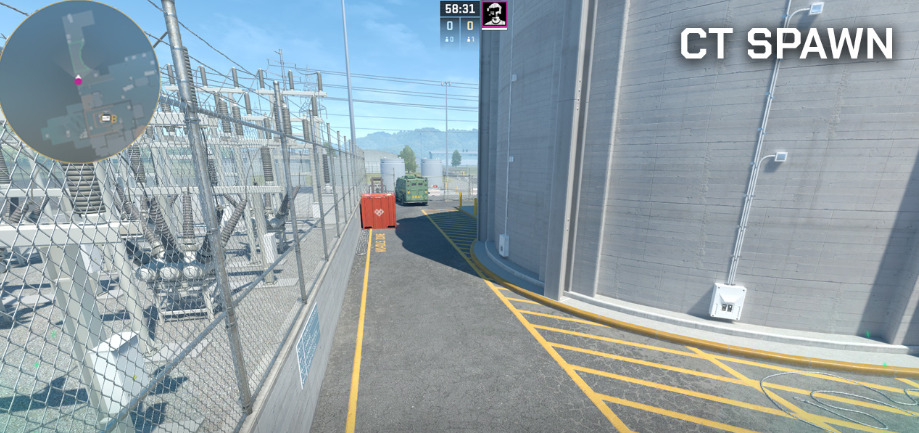
CT Spawn sits on the upper part of the map and connects to several major paths leading inside the building and toward the outside yard. Because so many routes branch out from here, a big part of the CS2 Nuke callouts map naturally grows around this area. Early in the round, most CT players are still close to spawn, so the first callouts usually mention positions that are one or two steps away from it. Even later on, CT Spawn stays a useful reference point because it helps place nearby areas in the bigger layout of the map.
T Spawn as the main reference on the T side
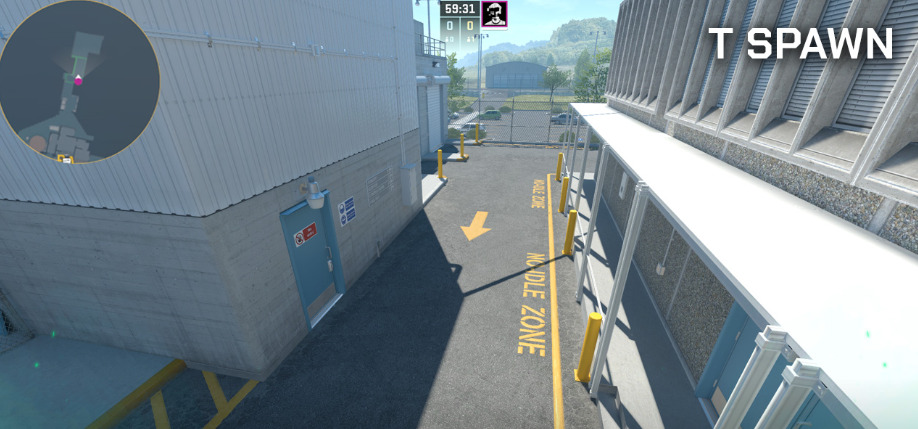
T Spawn plays the same role for the Terrorist side. It’s the starting point for moving toward the yard, the building entrances, and the main interior routes. In Nuke map CS2 callouts, many early references are tied to areas close to T Spawn simply because that’s where everyone begins and where the first bits of location information come from. Just like CT Spawn, it stays relevant even after players move away from it, because it’s a fixed point everyone can picture instantly.
Nearby areas as the first landmarks people talk about
The spaces directly connected to each spawn are some of the most commonly mentioned spots in early communication. They’re easy to recognize, easy to describe, and easy for everyone to visualize. When someone uses CS2 callouts Nuke in the first moments of a round, they’re usually talking about one of these nearby areas. These spots work like stepping stones between spawn and the deeper parts of the map, helping players keep track of where things are happening as the round develops.
Why spawn callouts show up so often at the start of rounds
Spawn-related callouts are simple, short, and completely unambiguous. Everyone on the team knows exactly where CT Spawn and T Spawn are, so using them gives instant context. Before players spread across the map, spawn is the one reference point everyone shares, which makes it the easiest way to describe positions and nearby areas without any confusion.
How spawn points help place both bombsites on the map
Both A site Nuke and B site Nuke become easier to understand once you see how they connect back to CT Spawn and T Spawn. The spawn areas act like fixed anchors in the middle of the CS2 Nuke callouts map. By relating other locations back to spawn, players can quickly place where something is happening in the overall layout. Instead of thinking of A and B as isolated areas, spawn-based references help tie the whole map together into one clear structure.
Outside Area Callouts on Nuke
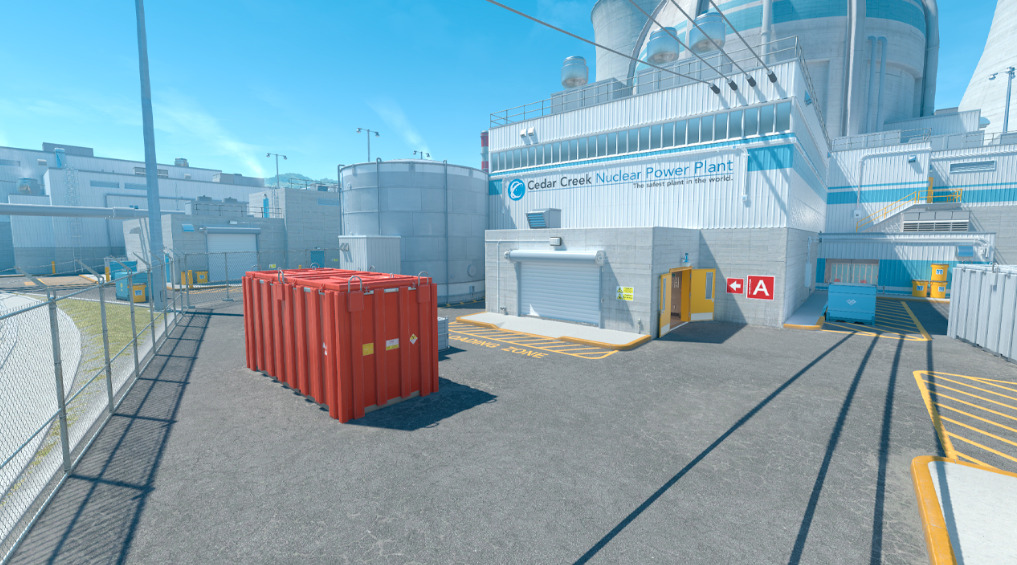
Outside is one of those areas on Nuke that everyone talks about all the time in in-game communication, and for a good reason. It’s the big open yard that sits between the main building and the outer edges of the map, and it connects a lot of important parts together. Because of Nuke’s vertical map design, Outside is a reference point that helps you understand where you are compared to the rest of the map.
- Where Outside fits in the map: Outside sits between the main entrances of the building and the routes that lead around the outside of the structure. It links the upper interior areas with paths that go down toward the lower level. In practice, it works like a central open zone that ties different sections together.
- The landmarks people use for callouts: Most Outside callouts come from things you can see right away: big structures, containers, vehicles, walls, and the building entrances. These are the features that naturally split the yard into smaller, named parts. In in-game communication, players lean on these visual cues because they’re obvious and don’t change.
- How Outside connects to the rest of Nuke: Outside isn’t a dead-end area. It links straight into the upper parts of the building and also into routes that go down toward the lower level, which is where Nuke’s vertical map design really starts to matter. Because of that, a lot of rotation paths are described in relation to Outside. Even without talking about specific moves, just mentioning Outside usually tells you a lot about how an area connects to the rest of the map.
A Site Callouts and Upper-Level Areas
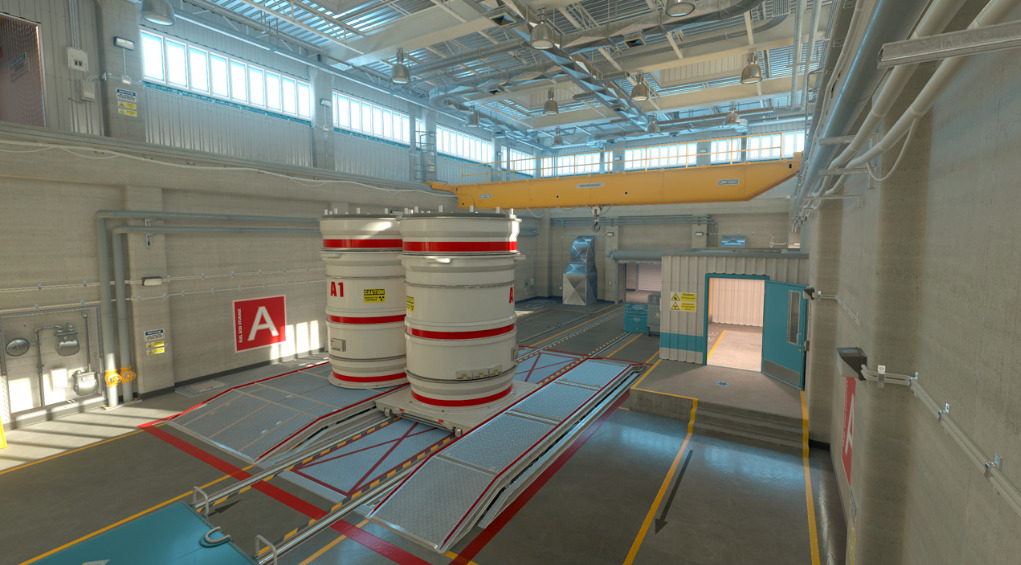
A site sits on the upper part of Nuke and it’s one of the most layered spots in the whole Nuke map layout. It’s not just one big room with a bomb marker in the middle. It’s a mix of floors, platforms, and surrounding spaces stacked on top of each other. Because of that, a lot of the Nuke map areas around A are named based on height and position, not just where they are on a flat map.
- How A site is laid out: The core of A site is the main floor where the plant area is, but above it you’ve got elevated positions and around it you’ve got separate rooms and entrances. All of these parts look and feel different, which makes it easy to split the site into smaller, named sections.
- Upper-level callouts and nearby spaces: A lot of the callouts here are for positions above the site floor. These spots overlook the main area and the entrances, so they naturally get their own names. On top of that, the rooms and connectors next to A site also have separate callouts, because they’re clearly different spaces in the overall Nuke map areas system. When you put it all together, the names help you understand not just where something is, but also whether it’s happening above, below, or next to the site.
- Keeping the names clear and consistent: The point of all these A site callouts isn’t to make things complicated. It’s to keep communication simple and precise. Each name points to a specific, easy-to-recognize part of the site or the areas around it. If you look at how the Nuke map areas are divided here, the logic is pretty straightforward: different levels and different spaces get different names, so everyone knows exactly which part of A site is being discussed.
Ramp and Transition Areas Between Levels
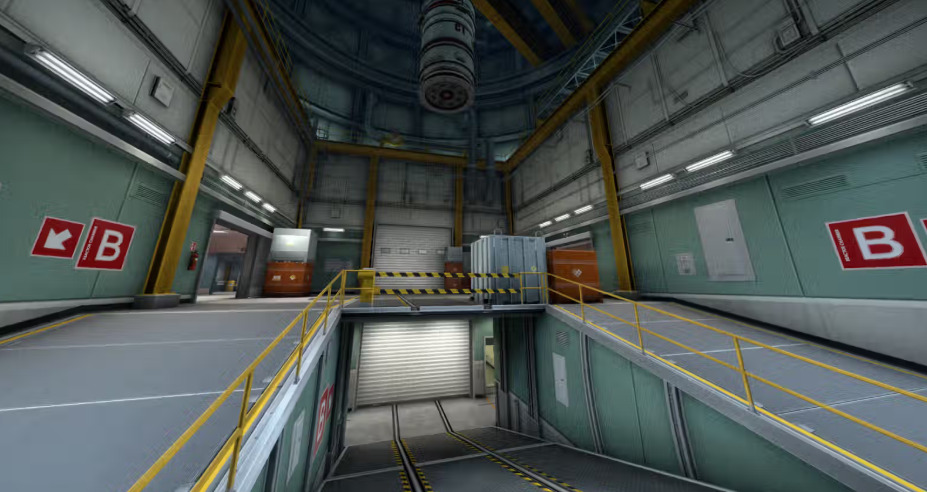
One of the main things that makes Nuke feel different is how much of it is stacked on top of itself. Because of that, the areas that connect different floors get talked about a lot.
- The spaces that link the map vertically: Ramp is the most obvious example: it’s a direct connection between the upper and lower parts of the building. Secret Nuke does a similar job, but from Outside down toward the lower level. All of these places are basically there to make the vertical layout of the map work as a single, connected space.
- Where the names come from: The logic behind these names is pretty straightforward. “Ramp” is literally a ramp. “Secret” has been used for years to describe a passage that feels hidden compared to the main routes. The names stick because they describe what the area is or how it sits in the map, which keeps things simple and easy to remember.
B Site Callouts and Lower-Level Areas
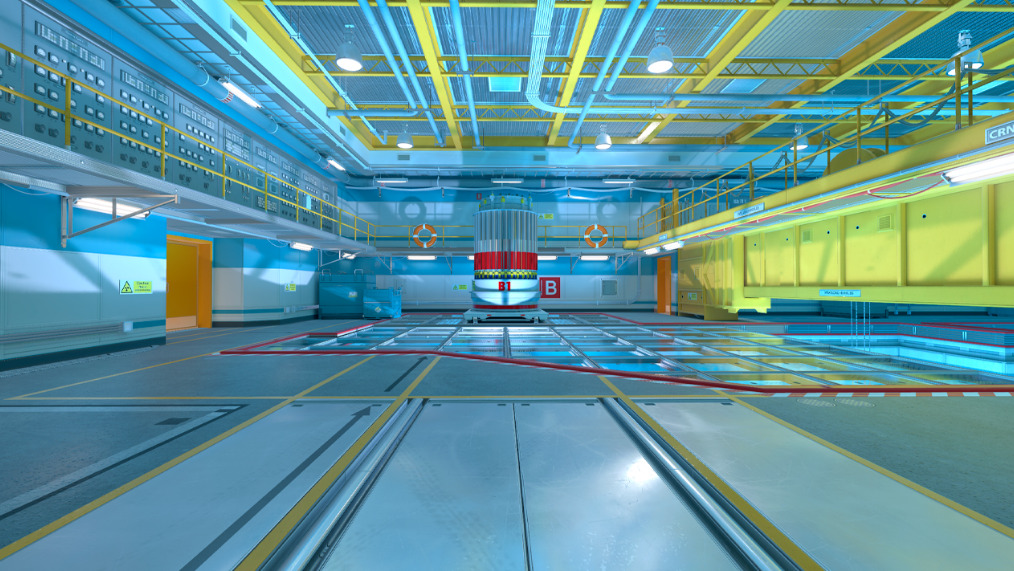
B site lives on the lower part of Nuke, and it has a totally different feel compared to the upper level. It’s more closed in, more layered, and a lot more about rooms and vertical drops than open spaces.
- How B site is laid out: B isn’t just one flat room with a bomb marker. It’s a main site area surrounded by a few connected rooms and entrances, some of them coming from above. Everything is packed pretty tightly together, and there are small height differences all over the place.
- Why height changes how callouts work on B: On B site, it’s not enough to just say where something is: you usually also need to know whether it’s above or below you. Two spots can be right next to each other but still feel like different places because one is higher up. That’s why so many callouts here are tied to drops, stairs, and raised sections. The vertical depth of this area really shapes how people talk about it.
- How B connects back to the rest of the map: Even though B site is down on the lower level, it’s still closely linked to the rest of Nuke through named connectors and drop points. Callouts that mention vents Nuke, or directions toward CT spawn Nuke and T spawn Nuke, help you place B site inside the full map layout instead of thinking of it as some isolated basement area.
Vertical Callouts: Levels, Heaven, Hell, and Vents
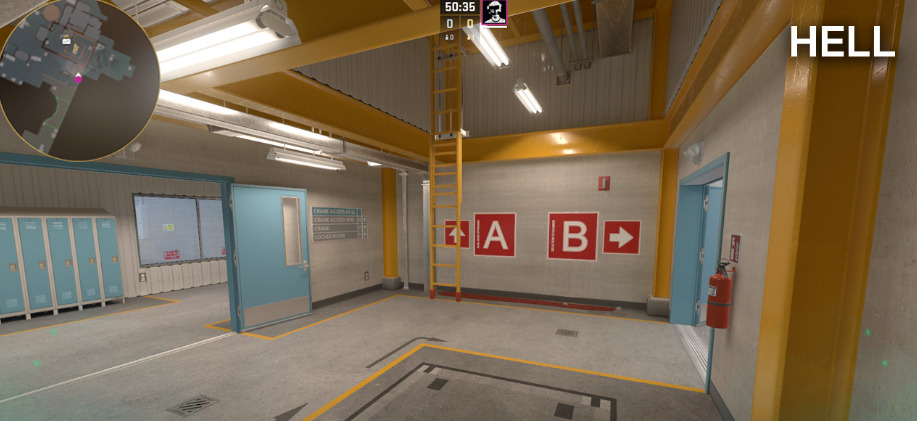
If there’s one thing that really defines Nuke, it’s how much of the map is stacked on top of itself. You’re constantly dealing with people above you, below you, or on some platform in between. That’s why callouts like Levels, Heaven, Hell, and Vents are such a big deal here. They exist for one simple reason: to make it clear how high or low something is, not just where it is on the map.
- Talking about height, not just rooms: A lot of vertical callouts aren’t tied to one exact room the way other names are. They’re more about describing elevation. “Heaven” and “Hell” are an easy way to split the same general area into an upper and a lower part. “Levels” helps narrow things down to a specific floor or tier. “Vents” points to a vertical connection rather than a normal hallway. All of these add an extra layer of detail that you just can’t get from flat, left-right callouts alone.
- How players use these words to be more precise: Most of the time, vertical callouts are added to area names. You say the place, and then you add whether it’s up top, down low, or on a certain level. That small extra detail makes a big difference, because it turns a vague location into something much more specific and easier to picture.
- Why this ties the whole callout system together: Once you step back and look at it, these vertical terms are what make Nuke’s callouts really work. They match how the map is built and how you actually move through it, going up and down just as much as forward.
Using Nuke Callouts in Team Communication
On Nuke, callouts are really just about keeping everyone on the same page. The map is busy and stacked on multiple levels, so the way you name places matters a lot.
- Keep the names simple and consistent: The best callouts are the ones everyone already knows. If you stick to the same names every time, your teammates don’t have to guess what you mean. On a map like Nuke, where there are a lot of places on top of each other, consistency saves a lot of confusion.
- Why standard names work better than long descriptions: Trying to describe a spot instead of naming it usually just slows things down. Different people imagine descriptions differently, but a standard callout points to one exact place. That’s why learning the common names is more useful than coming up with your own way to explain where something is.
- Say enough, not everything: A good callout gives just enough info to identify the spot. Adding extra details rarely helps and often just makes the message harder to follow. The whole point of callouts is to be quick and clear, not to paint a picture with words.
- Mistakes people make all the time: A really common one is using made-up names that only make sense to one person. Another is forgetting about height on a map where that matters a lot, which can make a callout misleading even if the area name is right. Some people also overload their callouts with details, which kind of defeats the purpose of having short names in the first place.
- Why this matters so much on Nuke: Because Nuke is so vertical and packed with connectors, small naming mistakes can turn into big misunderstandings. Using clear, shared callouts makes it easier for everyone to understand what’s going on, even if they’re nowhere near that part of the map.
Final Thoughts about Nuke Map Callouts in CS2
Nuke is the kind of map where knowing the names of places actually makes a real difference. With so many levels and connectors, it’s easy for things to get confusing if everyone is talking about locations in different ways. That’s why callouts exist in the first place: they give everyone the same words for the same spots.
Once the area names start to make sense in your head, the map feels a lot easier to read. You’re moving through clearly defined parts of the map, and you understand how they connect to each other. That alone makes communication smoother and helps you keep track of what’s happening around you.
At the end of the day, Nuke callouts are just a shared language for a complicated map. When that language is clear and consistent, everything else becomes simpler to follow.
Once players master Nuke callouts and improve in-game communication, many look for additional ways to use their CS2 skins. For a complete overview of trusted platforms, bonuses, and game types, visit our main page featuring the top CS2 gambling sites for 2026 with detailed reviews and promo codes.
FAQ
What are Nuke callouts, and what are they actually for?
They’re just the standard names for different parts of the map. People use them because it’s the fastest way to explain where something is happening, especially on a map with as many levels and connectors as Nuke.
Do these callouts change depending on the game mode?
Not really. The map stays the same, so the names stay the same too. Whether it’s competitive, premier, or another mode, players use the same callouts.
Why does Nuke use so many vertical terms like Heaven, Hell, and Vents?
Because height matters a lot on this map. You can have two players in almost the same place, but on different levels. Those vertical terms make it clear who’s above and who’s below.
Are callouts different in other regions or on different platforms?
The main ones are pretty consistent everywhere. You might hear small variations or slang, but the core area names are the same and widely understood.
Why do people mention Outside, A site, and B site so often?
They’re the main anchors of the map. A lot of other areas and connectors are described in relation to them, so they come up in conversation all the time.
Is it better to explain where something is or just use the callout?
Using the callout is usually better. It’s quicker, clearer, and points to one exact place instead of leaving room for different interpretations.